Using an online accountant in the UK provides small businesses with a modern, flexible approach to financial management. In 2026, automation has fundamentally changed how accounting services work—routine data entry that once consumed hours now happens in seconds, freeing qualified accountants to focus on what actually matters: helping you pay less tax and grow your business.
This guide breaks down exactly how UK online accountants use automation, who benefits most, and how to make the switch from traditional accountants or spreadsheets.
Key Takeaways
- A UK online accountant is a fully qualified professional delivering bookkeeping, tax returns, and advisory through secure cloud platforms like Xero, QuickBooks, and FreeAgent—typically 40-70% cheaper than traditional high-street firms
- Automated bookkeeping, bank feeds, and receipt-scanning apps now handle 60-80% of routine data entry, with online accountants reviewing and advising rather than manually processing
- Online accountancy services support limited companies, sole traders, partnerships, and landlords with fixed monthly pricing, statutory accounts, VAT returns, payroll, and Making Tax Digital compliance
- Switching from a traditional accountant or spreadsheets typically takes 7-14 days, with the new firm handling most of the migration work
- Data security includes encrypted portals, two-factor authentication, and UK GDPR compliance, while automation plus human oversight reduces errors and missed deadlines
What Is a UK Online Accountant in 2026?
A UK online accountant is a fully qualified accountant—typically a member of ACCA, ICAEW, or ICAS—who delivers all accounting services remotely via secure cloud accounting software and client portals. There are no physical offices to visit and no in person meetings required.
In 2026, online accountants typically use HMRC-recognised tools like Xero, QuickBooks Online, Sage Business Cloud, and FreeAgent to automate much of the accounting process. These platforms connect directly to your bank account, pull in transactions automatically, and apply rules to categorise income and expenses without manual input.
Unlike traditional accountants who rely on paper records, periodic meetings, and manual data entry, online accountancy services run on digital-first processes. Your financial data stays up to date in real-time, accessible from any device. Cloud platforms like Xero, QuickBooks, or FreeAgent allow access to financial data, providing real-time financial visibility.
Online accountants act as authorised agents with HMRC and Companies House, handling all filings, queries, and compliance remotely. They submit your corporation tax return, annual accounts, VAT returns, and self assessment tax returns directly to government systems.
Automation does not replace qualified accountants—it reduces manual tasks so they can focus on tax planning, proactive advice, and forward planning rather than data entry.

Who UK Online Accountants Help
Online accountancy now serves almost every common UK business structure and income type. Sole traders, limited companies, partnerships, and limited liability partnerships can all benefit from online accounting services.
Limited companies need statutory accounts filed with Companies House, CT600 corporation tax returns, payroll for directors and employees, and strategic advice on salary-dividend splits to maximise tax efficiency.
Sole traders and freelancers require automated expense tracking, annual self assessment returns, and from April 2026, quarterly Making Tax Digital updates for those with turnover above £50,000. Online accounting services are particularly advantageous for freelancers and contractors, providing tailored solutions for their unique accounting needs.
Traditional partnerships and LLPs benefit from automated profit allocations, partnership tax returns (SA800), and coordinated filing for individual partners.
Landlords need property-specific ledgers, mortgage interest relief calculations (now capped at 20% basic rate), capital gains tracking, and MTD-ready record keeping.
E-commerce businesses, including those operating on platforms like Amazon and eBay, can utilize online accounting services to manage their financial records efficiently. These online business operations generate high transaction volumes that particularly benefit from automation.
Online accountants cover clients nationwide—from London and Manchester to rural areas—without any geographic limitations.
Core Services of a UK Online Accountant
Most UK online accountants provide online accountancy services as a full-service offering: bookkeeping, year-end company accounts, tax returns, VAT, payroll, and ongoing advisory, all delivered through cloud based systems and, increasingly, AI-powered accounting services.
Online accountants provide a range of services including bookkeeping, tax returns, VAT returns, payroll services, and self-assessments, catering to various business structures such as sole traders, limited companies, and partnerships.
Core services typically include:
- Annual company accounts and statutory accounts under FRS 102 or FRS 105
- CT600 corporation tax return preparation and filing
- Self assessment tax returns for directors and sole traders
- VAT returns including MTD for VAT compliance
- RTI payroll submissions and pension auto-enrolment
- CIS returns for construction businesses
- Basic management reports and cash flow monitoring
Online accounting services typically offer all-inclusive packages that cover various accounting needs for a single monthly fee, making it easier for businesses to manage their finances. Many firms bundle these into fixed monthly packages—simple sole traders from around £20-30 per month, small limited companies from around £50-90 per month, mirroring the kind of tiered pricing plans for AI-powered accounting solutions seen in the wider market.
Online accountants typically provide unlimited support via phone and email, ensuring clients can reach their dedicated accountant whenever needed. Clients can expect a dedicated accountant who offers personalized advice and support tailored to their specific business needs.
Higher-level services like management accounts, cash flow forecasting, and budgeting support become practical when automation provides accurate, up to date data.
Automation of Accounting Processes
This is the core differentiator of modern online accountancy—replacing manual data entry and paper financial records with autonomous AI-powered accounting workflows that handle routine tasks at scale.
Bank feeds stream transactions directly from UK banks and challenger banks (HSBC, Barclays, Starling, Monzo) into accounting software daily. Automation features reduce manual data entry and human error. The software applies saved rules and AI-driven suggestions to categorise income and expenses, achieving 95% automatic matching in high-volume setups.
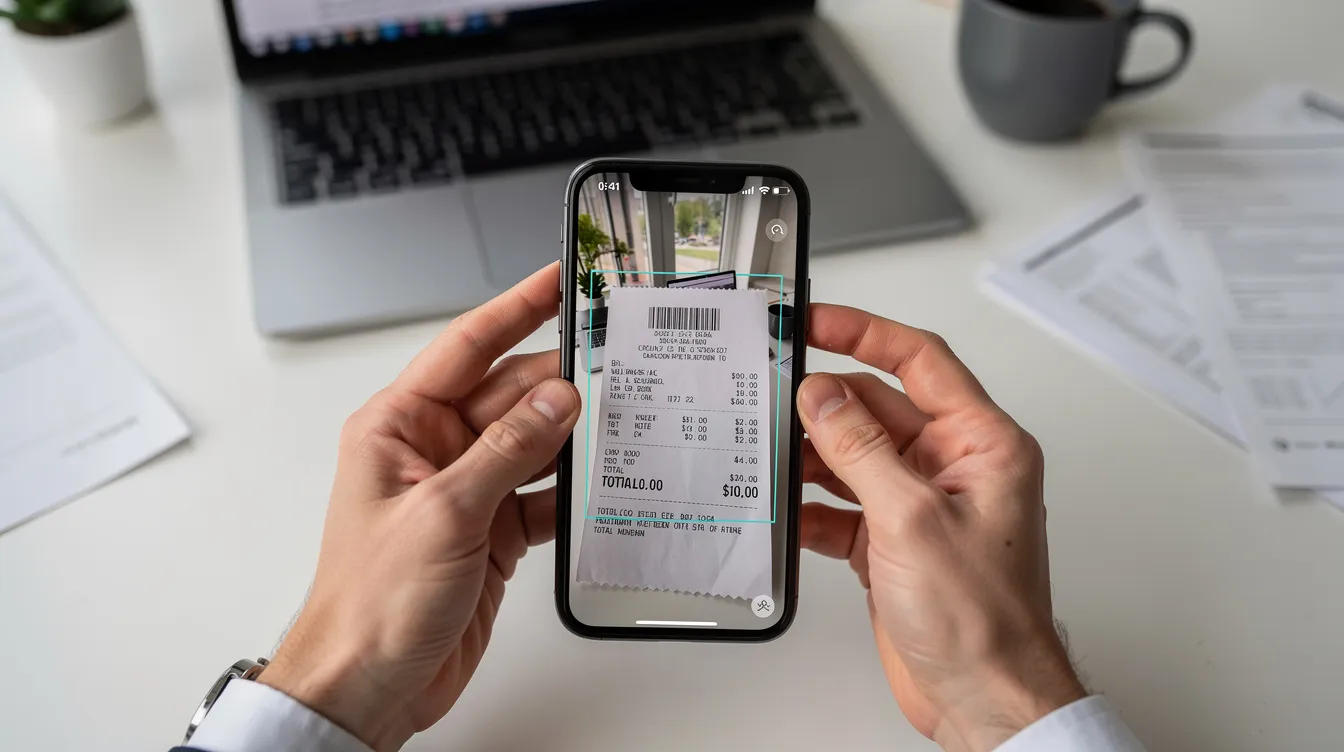
Receipt-scanning apps like Dext, AutoEntry, and Hubdoc use OCR technology to read receipts and bills, and can form part of a wider AI-driven end-to-end document workflow. Dext achieves 99% accuracy on structured invoices, attaching scanned images to transactions and auto-populating VAT codes. This eliminates the hassle of keeping paper receipts and manual keying.
Automated invoicing handles recurring invoices, payment reminders, and direct debit collection via GoCardless or Stripe. Studies show this reduces debtor days by 20-30%, improving your cash flow without manual chasing.
Making Tax Digital (MTD) is the UK Government’s initiative to digitise the tax system, requiring certain businesses to use HMRC-approved accounting software for tax obligations. MTD is currently mandatory for VAT-registered businesses, and from April 2026, it will extend to self employed individuals and landlords with income over £50,000 for Income Tax Self-Assessment.
The use of MTD-compatible accounting software helps streamline the tax return process, allowing for automatic calculations and digital submissions to HMRC, which can reduce errors and save time. The preparation and filing of tax returns is a fundamental aspect of accounting services, with automation in accounting software streamlining the process and allowing accountants to focus on tax optimization strategies.
Despite high automation, good online accountants still perform monthly reconciliations, often supported by AI-powered reconciliation systems, adjust journals, and review returns before submission. Automation reduces input errors from 5-10% in manual systems to under 1%, but human oversight catches the edge cases.
Online Accountant Services by Business Type
Accounting needs vary significantly between limited companies, sole traders, partnerships, and landlords—automation must be tailored accordingly.
Limited companies receive statutory accounts under FRS 105 (micro-entities) or FRS 102 Section 1A, CT600 filing with iXBRL tagging, director salary-dividend planning under current corporation tax rates of 19-25%, confirmation statements, and support with R&D tax credits or capital allowances where relevant.
Sole traders and freelancers benefit from automated income and expense tracking, quarterly MTD for ITSA updates (for those over the £50,000 threshold in 2026), and annual assessment tax returns. The use of online accounting software can streamline the tax return process by automatically calculating self-assessment tax returns in the background, allowing accountants to focus on providing tailored support and guidance.
Partnerships and LLPs get automated allocation of profit shares, partnership tax returns (SA800), and individual partners’ returns coordinated together, plus support with complex partnership changes.
Landlords benefit from automation of rental income and expense tracking (property-by-property), mortgage interest restriction calculations, capital gains tracking, and digital records ready for MTD for ITSA compliance. Many landlords managing multiple properties find the property ledger features particularly valuable for tracking allowable expenses.
Payroll management is a complex task for small business owners, involving accurate salary calculations, compliance with PAYE, and handling pension contributions, which online accountants can manage as part of their services.
Cloud Accounting Software and Integrations
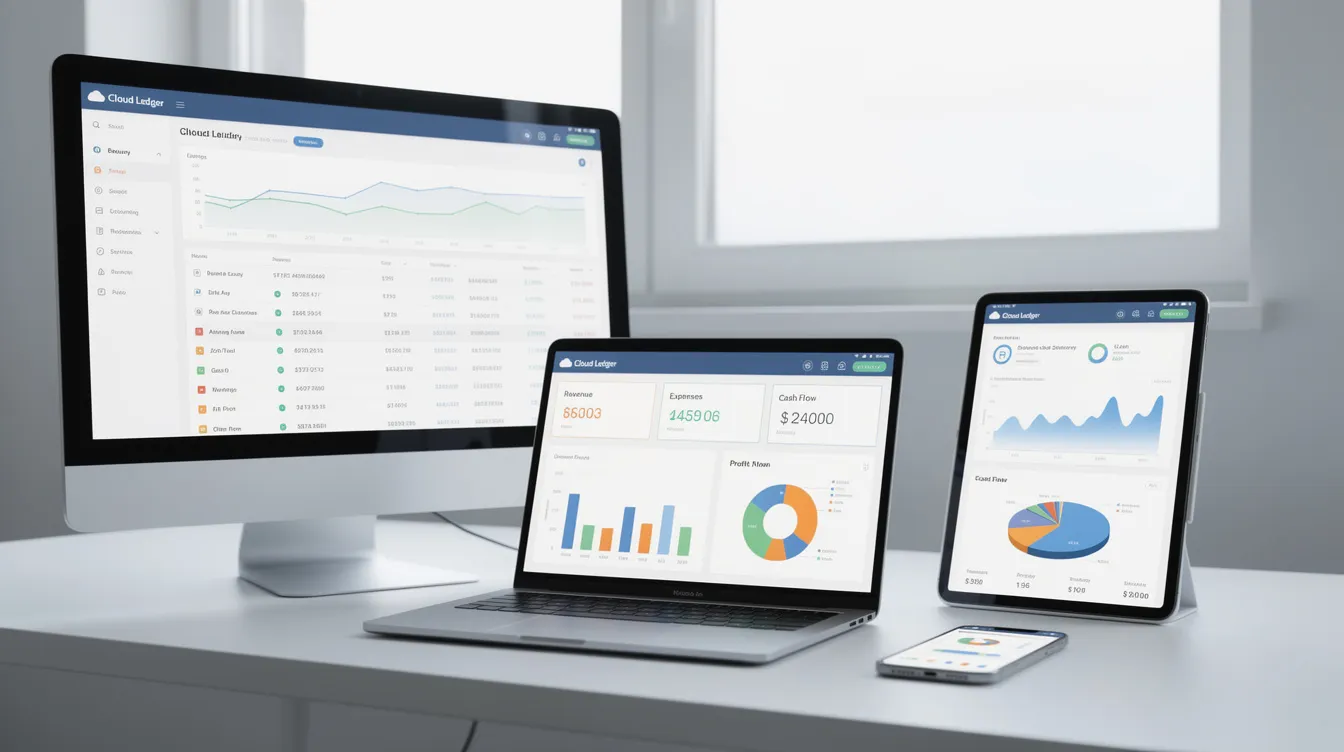
Most UK online accountants select a primary cloud platform—often Xero, QuickBooks Online, Sage, or FreeAgent—and build automated workflows around it. These represent leading accounting software options recognised by HMRC.
Clients typically get online accounting software access included in their fixed monthly fee, with automatic backups, multi-user access for your own bookkeeping if desired, and mobile apps for on-the-go invoicing and expense capture.
Key integrations that improve automation include:
- Bank feeds with major UK banks and fintechs via Open Banking APIs
- Payment gateways like Stripe, PayPal, and GoCardless
- Ecommerce connectors for Shopify, Amazon, and Etsy
- Inventory and stock management tools for product-based businesses
Online accounting software allows businesses to manage their finances in real-time, providing instant access to financial data such as profit, tax liabilities, and cash flow without waiting for year-end reports. Real-time dashboards show cash balance, overdue invoices, profit, and estimated tax bill at a glance.
Online accountants typically handle full setup and migration from spreadsheets or legacy bookkeeping software, including historical data import and chart of accounts design.
Pricing Models and Fixed Fees
Fixed-fee pricing is one of the main attractions of UK online accountants, giving business owners predictable monthly or annual costs with no surprise bills.
Many online accounting services offer fixed monthly fees, which can help businesses budget their accounting costs more effectively. Transparent pricing structures are common among online accountants, ensuring clients are aware of all costs without hidden fees.
Common pricing patterns include:
| Business Type | Typical Monthly Fee | What’s Included |
|---|---|---|
| Sole trader (basic) | £20-£35 | Bookkeeping, self assessment, MTD |
| Limited company (simple) | £50-£70 | Accounts, CT600, payroll, VAT |
| Limited company (complex) | £70-£90+ | Higher turnover, more transactions |
| Landlord (portfolio) | £30-£60 | Property accounts, SA returns |
| Online accounting services typically offer fixed, transparent pricing with no hidden fees, making budgeting simpler for businesses compared to traditional accounting services that may charge by the hour. |
When reviewing quotes, check whether software licences, director self assessment, payroll, VAT returns, and advisory calls are included. Confirm there are no hidden costs for year-end adjustments or HMRC enquiries. Reliable service means transparent pricing and written scopes of work.
Benefits of Choosing a UK Online Accountant
The main benefits come down to time savings, cost savings, better visibility, fewer missed deadlines, and easier collaboration with an accountant who sees real-time numbers.
Automation and cloud workflows typically reduce manual bookkeeping time by several hours per month, especially for businesses with high transaction volumes. This delivers hassle free accounting where your record keeping happens automatically.
Many online accounting services guarantee fast response times, often within a few hours, to ensure that client queries are addressed promptly. Online accountants can respond faster via email and secure messages than appointment-based traditional accountants—many firms offer same-day or next-day responses.
National coverage means small businesses in any part of the UK can access specialist expertise. A new business in Cornwall can work with ecommerce specialists, while a medium sized business in Edinburgh accesses tech startup experience—without being limited to local accountants.
Continuous access to up to date financial data makes it easier to plan for corporation tax, personal tax, and VAT, avoiding the shock of large, unexpected bills at the tax year end. A dedicated account manager can provide better service and proactive tax advice based on live figures rather than historical snapshots.
Security, Compliance and Data Protection
Reputable accountants operating online work under strict professional rules (ACCA, ICAEW, ICAS) and comply with UK GDPR and data protection law under UK law.
Typical security measures include:
- AES-256 encrypted client portals
- Two-factor authentication (2FA) on all logins
- Secure document storage in UK or EU data centres
- Role-based access control inside accounting apps
- Time-stamped audit trails for HMRC enquiries
Automation can actually improve compliance—digital records provide full audit trails, consistent VAT coding rules reduce errors, and automated reminders prevent missed deadlines. Professional indemnity insurance up to £5m is standard among reputable firms.
Confirm your chosen online accountant is a regulated firm with professional indemnity cover and is registered with HMRC as an agent authorised to act on your behalf.
For less tech-confident business owners, reputable firms offer onboarding help and simple guides to using portals and apps. Financial control improves with reliable service, not complexity.
How to Switch to a UK Online Accountant (Step-by-Step)
Switching from a previous accountant or spreadsheets is usually straightforward—the new firm handles most of the work.
Step 1: Discovery call or online form – Share your business details, current accountant situation, and accounting needs.
Step 2: Proposal and fixed-fee quote – Receive a clear scope of services and fixed monthly pricing.
Step 3: Digital engagement letter – Sign the service agreement electronically.
Step 4: Anti-money-laundering checks – Complete digital ID verification (typically via phone).
Step 5: Professional clearance – The new accountant contacts your current accountant directly to request trial balances and prior year records.
Step 6: Software setup and migration – Bank feeds connected, chart of accounts configured, historical data imported.
Previous years’ annual accounts, trial balances, and tax computations are requested directly from your previous accountant—you don’t need to chase documents yourself.
Once bank feeds, chart of accounts, and opening balances are configured, most small UK businesses can be fully onboarded within 7-14 days, barring complex migrations.
Tips for a smooth switch:
- Plan the change between year ends or VAT quarters where possible
- Centralise logins and documents before starting
- Agree communication preferences from day one
- Ensure your own dedicated accountant is assigned from the start
How Automation Changes the Role of Your Accountant
In a highly automated environment, the accountant’s value increasingly lies in interpretation, planning, and practical advice rather than manual processing.
Concrete examples include:
- Using real-time dashboards to warn you about approaching VAT thresholds (currently £90,000)
- Flagging upcoming tax bills or cash flow squeezes before they happen
- Reviewing director salary-dividend mix based on live figures, not year-old numbers
Online accountants can schedule quarterly or monthly check-ins to review performance, adjust estimated tax savings, and refine your approach based on current financial data. This ongoing support transforms compliance work into strategic partnership.
Automation frees time for scenario planning—hiring an employee versus using contractors (saving 13.8% employer NI via IR35 compliance), buying equipment versus leasing, or opening a second location. Up to date management reports make these conversations practical rather than speculative.
This partnership approach turns the dedicated online accountant into an ongoing advisor rather than a once-a-year compliance cost.
Choosing the Right UK Online Accountant
Key criteria when selecting qualified online accountants:
Qualifications and regulation – Chartered status (ICAEW/ACCA) is important when choosing an online accountant in the UK. Confirm membership of a recognised professional body.
Sector experience – Experience in the specific sector enhances an accountant’s understanding of unique tax rules and challenges. Ask about clients in your industry.
Software expertise – Look for Xero-certified, QuickBooks ProAdvisor, or equivalent certifications confirming they know the cloud accounting software inside out.
Clear pricing – Accountants provide fixed monthly fee structures with documented service levels. Check what “unlimited support” actually means.
Named accountant – Confirm you get your own dedicated accountant rather than a call centre approach.
Automation approach – Ask which processes they automate, how often they reconcile bank feeds, and how they review automated entries for accuracy.
Check independent reviews on Google and Trustpilot that reference responsiveness, clarity of communication, and help with HMRC issues. A short discovery call quickly reveals whether they understand your business model and communicate clearly.
Avoid cheap accountants who lack proper qualifications—the savings rarely justify the risk of errors or poor tax planning.
Frequently Asked Questions
Do online accountants in the UK offer the same services as traditional firms?
Reputable UK online accountants provide the full spectrum of services: bookkeeping, statutory accounts, corporation tax, self assessment, VAT returns, payroll, CIS, and basic advisory—all delivered remotely. The main difference is delivery method (cloud software and portals instead of in person meetings), not the scope or quality of services. Many online firms are regulated by the same bodies as traditional practices.
How does automation affect the accuracy of my accounts and tax returns?
Automation usually increases accuracy by removing repetitive manual data entry and applying consistent rules to transactions. Industry benchmarks show automation reduces input errors from 5-10% in manual systems to under 1%. However, human review remains essential—qualified accountants still reconcile accounts, check anomalies, and sign off returns before filing with HMRC and Companies House.
Is my financial data secure with a UK online accountant?
Serious online firms use encrypted portals, two-factor authentication, and secure cloud storage in UK/EU data centres, complying with UK GDPR and professional confidentiality rules. Digital systems typically provide better security and audit trails than email attachments, USB drives, or paper files. Confirm where data is hosted and what backup procedures exist.
What happens if I’m not very confident with technology?
Most UK online accountants provide simple onboarding support: step-by-step guides, screen-share calls, and clear instructions for uploading documents or using apps. Ask potential accountants what training and ongoing tech support they provide. Once initial setup is complete, day-to-day tasks are usually limited to using a mobile app to capture receipts and approving documents online.
When should I move from spreadsheets to an online accountant with automation?
Common triggers include: VAT registration, taking on employees, steady monthly turnover above £2,000-£3,000, or finding that bookkeeping and tax admin consume too much time. Moving earlier helps establish clean digital records, which makes future growth, funding applications, and tax planning easier. Most online accountants can import historical spreadsheet data, preserving your financial records when switching.